
The Practice
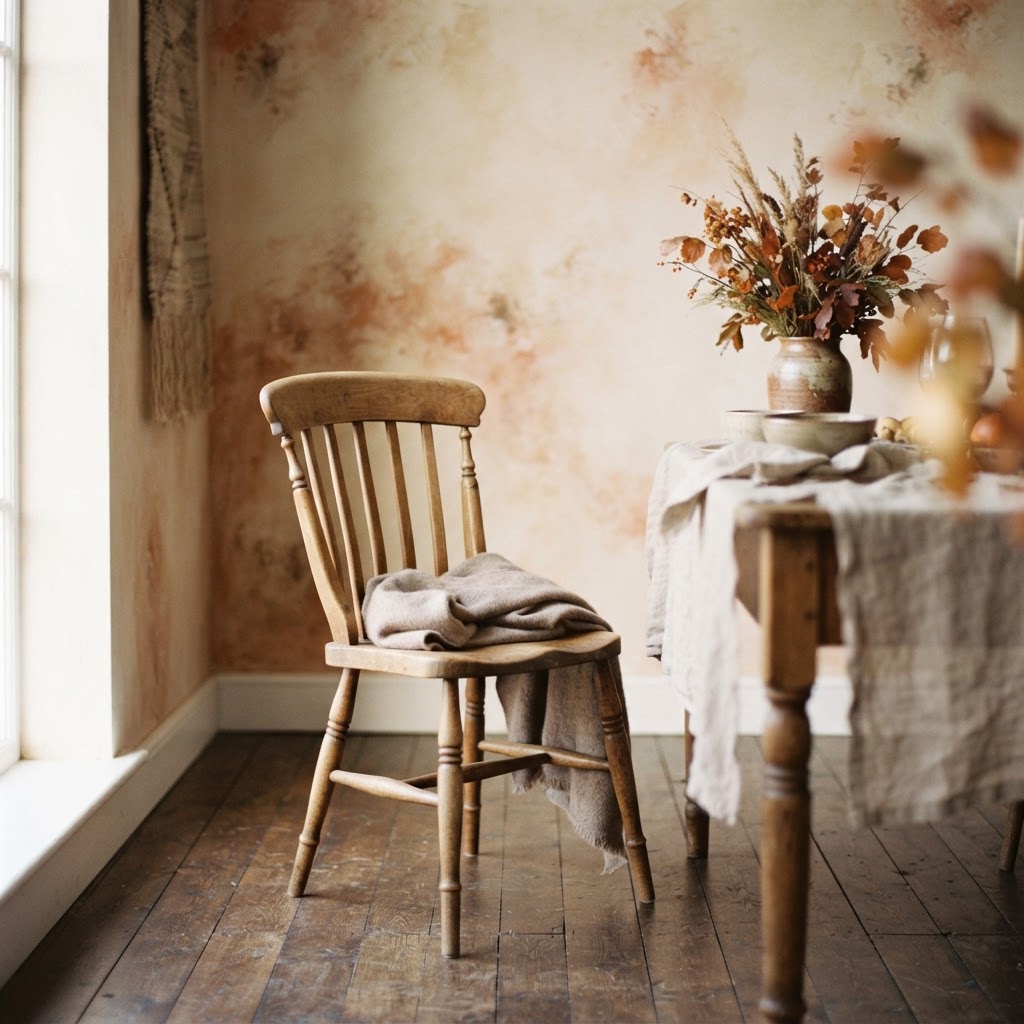
The Empty Chair at the Table

Marcia Yateman
November 1, 2026· 6 min read
Gratitude and grief often arrive at the same table in November. Here's how to let both sit down without asking either to leave.
There is a particular kind of ache that arrives sometime in the second week of November — before the gatherings even begin. You feel it when you see the first cranberry-colored centerpiece in a shop window, or when someone asks, with genuine warmth, "What are your plans for the holiday?" The question is simple. Your answer is not. Because this year, like every year since the people you've lost stopped sitting at your table, gratitude and grief have agreed to attend the same dinner, and neither one is leaving early.
If you have ever felt guilty for crying in the kitchen while the turkey rests, or for laughing at your cousin's joke moments after thinking of your father, you already know what this season asks of us. It asks us to hold two true things at once — that life is good, and that life is also missing someone. Most of us were never taught how to do that gracefully. We were taught gratitude as a performance of happiness, a kind of emotional tidiness. But real gratitude, the kind that actually heals, has never once asked grief to leave the room.
The Myth of the Grateful Heart That Doesn't Hurt
Somewhere along the way, gratitude got confused with positivity. We began treating it like a mood we were supposed to maintain rather than a practice we return to, imperfectly, again and again. This is especially true in November, when the cultural script insists that the appropriate emotional posture is abundance, ease, togetherness. But abundance and ease were never meant to crowd out the quieter truths sitting just beneath them — the empty chair, the voice you still reach for on the phone, the version of your family that no longer exists in the way it once did.
Your inner landscape doesn't organize itself the way holiday cards do. It doesn't separate joy into one box and sorrow into another. When you sit down at a table full of people you love, your body isn't choosing between feeling thankful and feeling the absence of someone who should be there too — it's doing both, simultaneously, in real time. This isn't confusion. It's wholeness. It's what it actually feels like to be a person who has loved and lost and kept living.
Gratitude was never meant to be the opposite of grief. It was meant to be its companion.
If you've spent years trying to feel "more grateful" as a way of outrunning sadness, it might be worth asking a gentler question: What if the sadness isn't something gratitude needs to fix? What if it's simply something gratitude needs to make room for?
What the Body Knows About Family Gatherings
Family systems have a particular kind of gravity. You can be thirty-eight years old, financially independent, emotionally self-aware — and still feel your chest tighten the moment you walk through your mother's front door. This isn't regression. It's your body's signals doing exactly what they're designed to do: remembering. Every gathering carries the residue of every other gathering that came before it — the ones that were warm, and the ones that weren't; the people who are gone, and the ways their absence rearranges everyone who's left.
This is why so many people describe the holidays as exhausting in a way that has nothing to do with cooking or travel. It's relational exhaustion — the quiet labor of translating between who you were in that family and who you've become, of holding boundaries with people who've known you since before you had any, of grieving relationships that are technically still intact but have changed shape so much you barely recognize them.
If this is you this November, consider this: you do not have to arrive at the table emotionally resolved. You do not have to have "made peace" with every loss or every difficult relative before you can sit down and pass the potatoes. Presence is not the same as resolution. You can be mid-grief and still show up. You can be uncertain about a relationship and still love the people in it. The table has room for all of it — even when the room itself does not always feel like it does.
You are allowed to bring your whole self to the table, including the parts that are still healing.
One small, practical thing to try: before you walk into a gathering this season, pause in the car, or the hallway, or wherever you have thirty private seconds, and name — just to yourself — one person or one version of your life that won't be at this table. Not to dwell. Just to acknowledge. This isn't about performing grief or disrupting the gathering. It's a quiet act of integration, a way of letting your inner landscape know that you see what it's carrying before you ask it to also hold conversation, logistics, and everyone else's expectations.
A Gratitude Practice That Doesn't Ask You to Perform
Marcia Yateman, the founder of Free Your Mind Care, often describes emotional healing as a practice of widening rather than fixing — widening our capacity to hold complexity instead of trying to resolve it into something simpler than it is. Gratitude, approached this way, isn't a gratitude list that forces you to find the silver lining. It's closer to an honest inventory: What is actually here, right now, in this moment, including the parts that hurt?
Try this tonight, or at some point this week, using one of the NLP-informed approaches Marcia works with in coaching: instead of asking yourself "What am I grateful for?", ask instead, "What do I notice, without judging it?" Write or simply think through three things — one that brings you ease, one that brings you grief, and one that brings you both at once. You might notice your sister's laugh is on that third list. You might notice the smell of a particular dish is, too. This isn't a trick to make grief smaller. It's a way of letting your gratitude become spacious enough to be true.
This kind of reframing isn't about replacing sadness with appreciation — it's about letting them coexist long enough that you stop needing to choose. Over time, many people find that this coexistence is itself a kind of relief. You're no longer managing two competing emotional currencies. You're simply, finally, feeling what's actually there.
If grief feels larger than this moment, larger than a journal prompt or a pause in the car, that is worth honoring too — and worth bringing to a therapist or grief counselor who can walk alongside you in that deeper work. Coaching tools like this one are meant to complement that kind of support, not replace it; they're small widenings, not substitutes for the slower, deeper healing that grief sometimes asks of us.
It is Marcia's vision, through Free Your Mind Care, to reach more people navigating exactly this — the complicated, layered, very human experience of gratitude that isn't uncomplicated at all.
This November, you don't need to arrive at anyone's table with your grief resolved or your gratitude performed. You only need to arrive as you are — layered, a little tender, entirely human. Notice what's actually there. Let the empty chair be empty. Let the gratitude be real anyway. Both can sit at the same table. They always have.
Partner Spotlight
Your brand aligns with a community of emotional healing seekers. Partner with The Emotional Alchemist.
Become a Partner →The Alchemist's Letter
New essays on emotional healing, delivered monthly. No noise — just the work.